Tuesday, 7 July 2020

Tudor Submariner Vintage 94010

I am not a huge Tudor watch collector. Nevertheless, along the way, I have managed to collect a few Tudors. The Key Tudor sports submariner are as follows:

Ref. 7922: The first Tudor Submariner
Ref. 7923: The manual Submariner
Ref. 7924: “Big Crown”
Ref. 7928: “Square Crown Guards (1959) ” “Pointed Crown Guards, (1960) ” or Rounded Crown Guards” (1964- 1966)
Ref. 7016: “Snowflake” (and Ref. 7021, Snowflake date)
Ref. 9401, 9411: Snowflake 2 (1975-1990s)
Ref. 79090, 79190: The Last Submariners (1995-1999)

Of all the Submariners, I have only managed to collect  the near mint Tudor 94010 by accident (from the 1990s) and the Tudor 7928 where the dial is turning Tropical (March 2017). 


Some History: 

In 1954, the year following the release of Rolex's Submariner, Tudor released their first Submariner as an affordable alternative that didn't lack in quality or craftsmanship yet leveraged a non-in-house Rolex movement. 

In 1964, Tudor manufactured the Rose Submariner  Ref. 7928 with rounded crown guards, a shape that would define the Submariner collection until the end of the 1990s. There are a few variations of the 7928. For my Tudor 7928, it uses the calibre 390 from Fleurier, and the dial was printed in white (instead of gilt) while the markers are in gilt, the hands were characteristic of the Submariner collection, and the case featured rounded crown guards and a Rolex signature.

Although Tudor made Submariner references containing the "Snowflake" dial well into the mid-1980s, in 1978 Tudor introduced a new dial format of the Oyster Prince Submariner which included round and triangular indexes as seen on this ref. 94010 and also the subsequent references. Ultimately this new dial format would replace the "Snowflake" configuration and would last well into the late 1990s on the Tudor Submariner line of timepieces. 

Tudor 7928

Tudor offered the Ref. 9401/0 in four dial/bezel combinations: blue or black with “snowflakes” hands and hour markers, as well as blue or black with characteristic Submariner (Mercedes) hands and triangular and round hour markers. My Tudor 94010 is with black dial, Mercedes hands and triangular and round hour markers as below:

Tudor 94010

I have paid S$500 for the Tudor 94010 during the 1990s as the watch was not popular then and it was part of the package deal where I need to get a few nice Rolex bubbleback together with this un-wanted Tudor. The irony of life is that this Tudor turn out to be the real gem in today's context.


Tudor SUBMARINERS: FROM 1954 TO 1968

Tudor SUBMARINERS: FROM 1954 TO 1968

(Source: https://www.tudorwatch.com/en/inside-tudor/history/tudor-history-submariners-1954-to-1968)

In 1954, TUDOR set out on a new path which would contribute to forging its legend. It was in that year that the brand’s first divers’ watch, the TUDOR Oyster Prince Submariner reference 7922, saw the light of day. Designed from its origin to fulfil exceptional criteria of durability, reliability, precision and waterproofness at a moderate price, it quickly positioned itself as an instrument of choice for professionals. Over the next 45 years this original tool-watch continuously evolved to ever better meet the specific requirements of the many types of divers who were clients of the brand. The first generation of TUDOR Submariners saw numerous versions, and through them, a notable advance in terms of performance; for example, the maximum functional immersion depth, set at 100 metres initially, reached 200 metres with the introduction of reference 7924 in 1958.

During this period, multiple experiments were conducted to determine which characteristics were indispensable to the ideal divers’ watch. Each reference in the 7900 series thus featured subtle specificities which, whether or not they were retained in the development of the product, contributed to its legend. Finally, with the latest variation of reference 7928, recognisable by its round crown guards, it was in the first half of the 1960s that the general lines and technical specifications that constituted the TUDOR Submariner were established.


1954: TUDOR OYSTER PRINCE SUBMARINER 7922

The first TUDOR divers’ watch was presented in 1954. It bore the name TUDOR Oyster Prince Submariner, reference 7922. It was a self-winding watch unique in the brand’s collection. Its features corresponded to its function as a divers’ watch: a case with a screw-down back and a crown whose waterproofness was guaranteed to a depth of 100 metres, large hour markers and hands with luminous material for easy reading in deep water, as well as a bidirectional rotatable bezel graduated in 5-minute intervals to precisely measure dive time and allow for the adjustment of the decompression stages. Its black lacquered dial, subtly domed, was designed to optimise contrast with the indications it bears – the gilt inscriptions “OYSTER PRINCE” at noon under the brand logo, and “100 m = 330 ft”, “SUBMARINER”, “ROTOR”, “SELF-WINDING” on four lines at 6 o’clock. There is also a reminder of its guaranteed waterproofness at 6 o’clock, in metres and in feet. Its Tropic-type Plexiglas crystal was dome-shaped for better water pressure resistance. Its movement was the self-winding calibre 390, developed on a Fleurier movement-blank with a frequency of 18,000 beats per hour. Finally, its 5 mm-diameter screw-down crown and its Oyster-type bracelet, reference 6636 with riveted links, were signed with the Rolex logo.

1955 TUDOR OYSTER SUBMARINER 7923

Reference 7923 was the only TUDOR Submariner to have been equipped with a manually-wound movement. This technical choice made it a particularly flat divers’ watch. Thanks to its screw-down case back and crown, characteristics proper to the Oyster case, as well as its domed crystal, the waterproofness of the TUDOR Oyster Submariner was ensured to a depth of 100 metres. Its black lacquered dial was no longer inscribed “ROTOR”, “SELF-WINDING” at 6 o’clock since the movement used was not self-winding. In place of these indications, the dial now bore the epithets “SUBMARINER”, “SHOCK-RESISTING”. A reminder of the waterproofness was not visible on the dial and the hands used were in baton style, different from those that equipped the first-generation Submariners. Reference 7923 was equipped with the manually-wound ETA calibre 1182 with a frequency of 18,000 beats per hour. Its Oyster-type bracelet with riveted links, reference 6636, bore the Rolex logo. On the example shown here, two straight cylindrical bars replaced the more common curved end links holding the bracelet to the case.

1958 TUDOR OYSTER PRINCE SUBMARINER “BIG CROWN” 7924

Renamed “Big Crown” by collectors, an allusion to its 8 mm winding crown, reference 7924 appeared in 1958. At first glance similar to its predecessors, it presented a fundamental innovation in that its waterproofness was from then on doubled to a maximum immersion depth of 200 metres. To reach this new threshold, the Submariner case, 37 mm in diameter, had been made thicker and was equipped with a larger screw-down crown. A new Tropic-type Plexiglas crystal, thicker and dome-shaped, was installed for better resistance to great pressure. With the same self-winding calibre 390 as reference 7922 at its heart, this new Submariner bore at 6 o’clock on its black lacquered dial the inscription “200 m = 660 ft”, a reminder of its waterproofness guarantee. Its hands reverted to the characteristic Submariner design. Its Oyster-type bracelet with riveted links, reference 7206, bore the Rolex signature.

1959 TUDOR OYSTER PRINCE SUBMARINER “SQUARE CROWN GUARDS” 7928

In 1959, with the advent of reference 7928, TUDOR for the first time proposed the principle of guards to protect the winding crown from shocks. The variations in the execution of this protection were an illustration of the dynamic continuous evolution of the same reference, very characteristic of the first-generation TUDOR Submariners. Reference 7928, shown here and produced in 1959, presented the square version of these protections, called “Square Crown Guards” in collectors’ circles. With these new protections, the size of the crown used would now be 6 mm. The case measured 39 mm in diameter, was waterproof to a depth of 200 metres and bore the signature “ORIGINAL OYSTER CASE BY ROLEX GENEVA”. The design of its dial, hands and bezel was similar to that of references 7922, 7924 and 7925. Its movement was the self-winding calibre 390, just as for all the TUDOR Oyster Prince Submariners in the 7900 series.

1960: TUDOR OYSTER PRINCE SUBMARINER “POINTED CROWN GUARDS” 7928

The evolution of reference 7928 was continuous, like the changes in the crown guards of its cases. The TUDOR Submariner case was seeking its ultimate line, passing from an initial version of square crown guards to new more pointed ones, with reference 7928, similar to the one produced in 1961, earning the nickname “Pointed Crown Guards” among collectors. It would find its ultimate line several years later, with a rounded shape that would not change until the last of the TUDOR Submariners. Waterproof to a depth of 200 metres, the 39 mm case of reference 7928 bore a Rolex signature, as did its crown and its Oyster-type bracelet. Its dial bore the gilt inscriptions “OYSTER PRINCE” at noon under the brand logo, and “200 m = 660 ft”, “SUBMARINER”, “ROTOR”, “SELF-WINDING” on four lines at 6 o’clock. Its bezel was bidirectional and graduated with a luminous insert placed at zero on the graduation. Finally, its movement was the self-winding calibre 390.

1964 TUDOR OYSTER PRINCE SUBMARINER “TROPICAL” 7928

The TUDOR Oyster Prince Submariner presented here and produced in 1964 featured two notable particularities. To begin with, its case had a new rounded version of crown guards. After the square or pointed shapes of the older versions of reference 7928, these new crown guards were progressively adopted by TUDOR Submariners. Ergonomic, they would not change in appearance until the end of the 1990s. The bezel and dial of this example subsequently underwent discolouration due to intense and prolonged exposure to UV rays. Collectors use the term “Tropical” to describe this type of change, which is greatly prized. The inscriptions on the dial of this example were silver-coloured. In accordance with the components specific to reference 7928, the case and screw-down crown of this model were signed Rolex. Its waterproofness was guaranteed to a depth of 200 metres and it was equipped with the self-winding 390 movement.

1967: TUDOR OYSTER SUBMARINER 7928

Produced in 1967, the example of the TUDOR Oyster Prince Submariner illustrated the subtle evolution of the reference 7928 dial during the 1960s. On earlier versions the minute graduations were imprinted within a circle; now each individual graduation extended to the flange, and the circle disappeared. The gilt, then silver-coloured, inscriptions used formerly were also progressively abandoned in favour of white ones, as demonstrated here. With its dial printed in white, its characteristic hands, its case with rounded crown guards signed Rolex, its domed Plexiglas crystal, its waterproofness guaranteed to a depth of 200 metres, its self-winding 390 movement and its Rolex Oyster-type bracelet, the reference 7928 presented here was the ultimate version of the first generation of the TUDOR Submariner. The result of thirteen years of research and experimentation in the field of divers’ watches, this model defined the foundation on which the next 30 years of the TUDOR Submariner would be built.


Monday, 29 June 2020

June 2020 Stock take

I have tried to limit the number of watches to collect to keep it manageable. For Jan - June 2020, the following are my key highlights and key finds. Following my meeting with Gary, for the coming months, I am planning to streamline and tighten my watch collection. My current collection ranges from Rolex classic and sports, Omega, Longines to Military watches, Doctor's watch to watch with special dials. I will try to trade away some watches and reduce the quantities.

Watches Bought in 2019

Longines Doctor watch (Feb 2019)


Longines pointer watch (Oct 2019)

Weekly auto Orient (Dec 2019)


Orient world timer (Dec 2019)

For the year 2020, I have decided to reduce the quantities of watches I have. As a course of actions, I have traded away some watches in order to bring in some others. In doing so, I hope I am able to tighten my watch collection. There are times where we are tempted as collector to buy some watches where we later regret. Regret in the sense that it does not fit in the current collection focus or we need to expand our collection further.

Watches bought 2020
Rolex Viceroy (Jan 2020)

Rolex Zephy 1008 (Jan 2020)

Bulova Accutron Spaceview (May 2020)

Rolex Prince jump hour (May 2020)


Tudor 7934 (June 2020)

Rolex 1607 (June 2020)

Watches Traded away (2020)
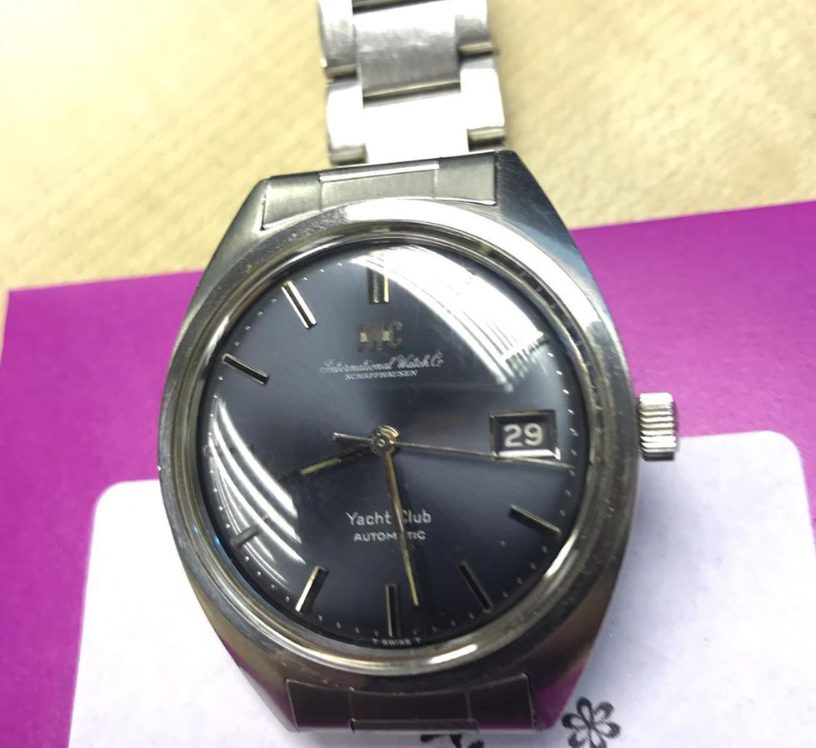
It is never easy to let go watches collected. I have decided to reduce my non core watches consisting of the JLC Memovox & Angelus (initially I was thinking of starting a collection of the alarm series & Angelus series). Moreover, I have broken up my vintage IWC collections & decided not to continue the skin diver series and Longines and Omega watches. During the process, I have also streamlined some of my spares Rolex watches.


Saturday, 27 June 2020

Rolex reference 1607 from 1965

I have always love the Rolex Datejust. There are more versions of the Rolex Datejust than we can probably imagine, ranging from reference 1600 smooth bezel to 1601 to  1603  Engine Turn bezel etc and this model alone is the theme of many collections. This one here is a rare reference, 1607, characterized by a “bark” finish on the bezel and if there is a bracelet, there will be bark finish on the on the central links of the band as well.

I believe the Rolex 1607 only comes in solid gold while the others 1600, 1601, 1603 are mainly in Steel, Half gold. The sold gold version for the reference 1601 and 1607 is quite rare. Even though the Watch is stamped 1607, it still uses the 1601 stamped back case.

Rolex’s famed Day-Date reference 1807 is characterized by the bark finishing featured on the bezel and centre links. The Rolex Datejust reference 1607 is characterized by the same bark finish on the bezel and bracelet. Beside the standard and bark finish, there is one more Florentine Finish Watch for the 1803. The watch is from Hong Kong


VINTAGE ROLEX DATEJUST 36MM 1607 18K YELLOW GOLD CHAMPAGNE DIAL DAUPHINE HANDS 


Monday, 8 June 2020

Tudor Oyster 7934 with special dial for the Middle East or Indian markets

This afternoon, despite the dark sky and rainy weather, there is sunshine in me as I have manage to make a deal to trade my Rolex 1601 special ghost dial for a Tudor 7934 with special acrylic floral design center dial. It uses the caliber 1156 manual wind movement, 17 jewels.

I am always fascinated with watch with special dial and especially for watches made for the Middle East or the Indian markets. I was told that during the 1950s, these watches were only customized for the the Middle East market or Indian markets, and it is estimated that there will be no more than 100 watches in the world.


My fellow collector friend Gary has a complete collection of these. There are a few variations. First is the size. There is one at 31 mm size (Reference 7803) and another at 34 mm (Reference 7934). Moreover, besides red, there are blue and green colours as well honeycomb dial versus flat dial. (Please see photos of Gary's collection below).


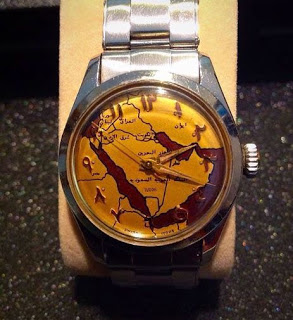
Besides these, there is also another versions made for the Middle East with the map and special indexes as below. I must have kept the Tudor watch since the late 1980s and early 1990s.


Wednesday, 3 June 2020

Vecheron & Constantin/Le Coultre diamonds galaxy mystery dial 1950s


This post was written in 2011.


Tuesday, May 10, 2011

Vecheron & Constantin/Le Coultre diamonds galaxy mystery dial 1950s

This watch is a 1950s Vacheron & Constantin/LeCoultre Diamond “Galaxy” Mystery Dial in White Gold. The Diamond “Galaxy" Mystery Dial dress watch was a joint venture between LeCoultre and Vacheron Constantin.

This beautiful 1950s double-signed Vacheron & Constantin/LeCoultre Diamond “Galaxy" Mystery Dial dress watch is in Excellent all-original condition. The “Galaxy” is the deluxe version of these Mystery Dial watches and features an amazing 37 diamonds on the dial.

VXN signed, K480CW Swiss made calibre 17 jewel manual winding movement. The fully signed two piece snap top-bezel case (33mm). The distinctive 37-diamond black dial, which has a unique rotating center disk for the hour hand and a rotating clear disk for the minute hand and of course genuine diamond markers, has been nicely kept. It has a clean acrylic crystal.

I have kept quite a nos of mystery dial and this must be the Rolls Royce of the mystery dial watch.


Monday, 1 June 2020

Vacheron & Constantin vintage ref 4870 watch with Vario strap

This is my latest watch, a vintage Vacheron & Constantin 18k yellow gold automatic watch Calibre: P1019/1 with my new Vario strap. This model is without the date function. The later models were using P1019/2,1071/72 calibers. I have to let go two of my watches (JLC Memovox and Stainless steel Omega Constellation) as part of my streamlining exercise in order to get this. This is a departure of my norm.The watch is from late 1950s to early 1960s. The early 1950s model was non screw back case using caliber P499, while the later 1950s models using P499 were using screw back case.

I do not have many Vacheron & Constantin watches as firstly, these were quite rare with very little information or books written. Secondly, they are expensive watches. This is my second Vacheron & Constantin watch. My first one was a Mystery dial, 1950s Vacheron & Constantin/LeCoultre Diamond “Galaxy” Mystery Dial in White Gold bought in 2011 in Hong Kong. The Diamond “Galaxy" Mystery Dial dress watch was a joint venture between LeCoultre and Vacheron Constantin and the dial has LeCoultre branding while the back case has Vaecheron & Constantin written. What has attracted me is the special enamel dial and the relatively big size at 36mm (considered big during the 1960s). As a watch collector, besides Patek Philippe, one would have at least one Vacheron & Constantin as it is one of the brand with nice history and heritage.

I hope to find one more Vacheron & Constantin in white gold automatic to match this and form a small collection.


The Old Vacheron watch did not have the Maltese cross logo at the dial, and the 1960s-70s has the Vacheron "&" Constantin wording. Later models only has Vacheron Constantin, without the "&". Moreover, the early 1960s dial were made of Enamel (烧青盘) where the dial has to undergo high temperature treatment. The watch is a good size to wear (36.5mm) and is considered large as the average size of watch then was 30mm-33mm. I hope to find another Vacheron & Constantin in White gold to match it.


Please see the evolution of movements information from the internet:

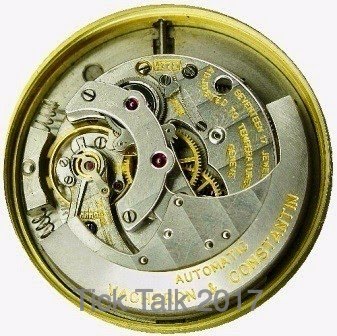
V&C’s first automatic wrist watch was introduced in 1951, the 12-ligne bumper-winding caliber 477 with central seconds.  Like all of their calibers since 1938, it was based upon a rough-finished ebauche from their movement supplier Jaeger LeCoultre

cal. 477 

google.com, pub-9153422137839320, DIRECT, f08c47fec0942fa0

Rolex ref 6309 Thunderbird Bubbleback Datejust Yellow gold (from 1955)

Previously I have bought a 18k Rose gold Rolex ref 6309 Thunderbird Bubbleback Datejust Rose in May 2022. My focus is to grow the so called ...

google.com, pub-9153422137839320, DIRECT, f08c47fec0942fa0